

Aeration and Overseeding: What It Is and Why It Works
If your Midlands lawn thins out every summer and never quite bounces back, you're not doing anything wrong. Columbia's clay soil compacts hard, and cool-season grass mixed with our hot, humid stretches makes turf work overtime just to survive. That's where aeration and overseeding come in, and it's the single most effective thing you can do for a tired lawn each year.
So what does aeration and overseeding do, exactly? Aeration pulls small plugs of soil out of your yard, relieving compaction so water, air, and nutrients can actually reach the roots. Overseeding in Columbia, SC follows right behind it, dropping fresh grass seed into those open holes so it germinates in direct contact with soil instead of sitting on top of thatch. Together, core aeration and overseeding thicken thin turf, crowd out weeds, and repair the damage a South Carolina summer leaves behind.
In this article, we'll walk through how the process actually works, why fall aeration and overseeding timing matters so much here in the Midlands, how to prep your lawn beforehand, and whether the results are worth the investment for your specific property.
Why aeration and overseeding matter for a healthy lawn
Columbia soil is loaded with clay, and clay compacts fast under foot traffic, mowers, and just plain heat. Once soil compacts, it behaves almost like concrete just below the surface. Water runs off instead of soaking in, roots hit a wall a few inches down, and grass spends its energy surviving instead of spreading. That's the core reason so many Midlands lawns look thin by August no matter how much you water or fertilize.
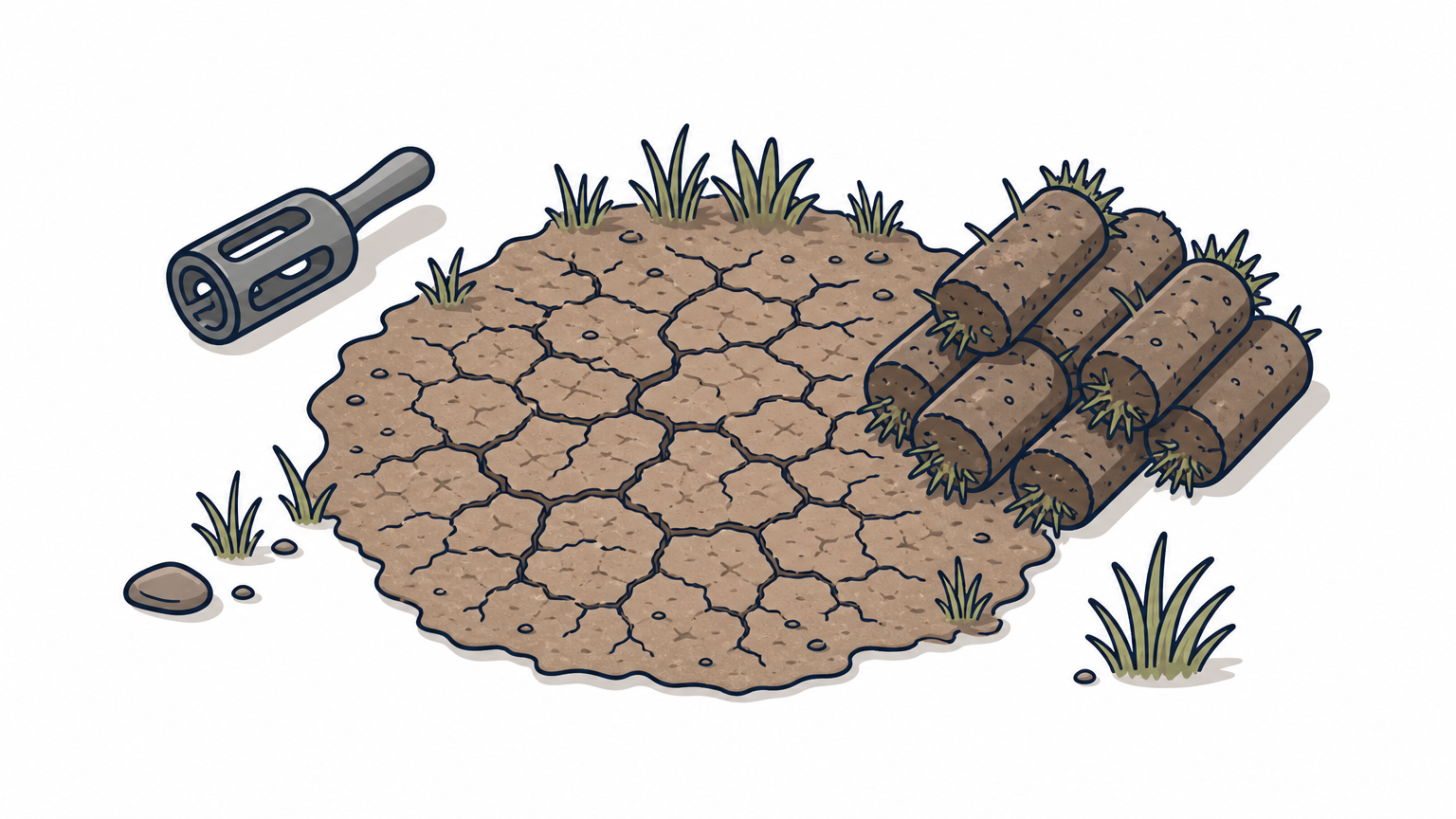
The compaction problem in Columbia clay soil
Heavy clay holds onto moisture right after a storm, then bakes into a hard crust during dry spells, which is exactly the swing our summers deliver, and it's the main reason lawn aeration in Columbia, SC works the way it does. Lawn aeration and overseeding breaks that cycle by physically pulling plugs of soil out of the ground, opening channels for air, water, and nutrients to reach root zones that have been cut off for months. Without that relief, even a well-fed lawn stays stressed, because the roots simply can't access what you're putting down.
A lawn can't use fertilizer or water it never actually reaches.
What thick turf actually prevents
A dense, healthy stand of grass isn't just about curb appeal, though that matters too. Thick turf shades the soil, which keeps weed seeds from getting the sunlight they need to germinate. It also out-competes crabgrass and other opportunists for water and nutrients before they get a foothold. Does aeration and overseeding work as a weed strategy on its own? Not entirely, but it removes the bare, thin patches where weeds establish in the first place, which makes spring weed control timing and every other maintenance step you take more effective.
Here's a quick look at what each half of the process solves:
| Problem | What causes it | How aeration and overseeding fixes it |
|---|---|---|
| Water runs off instead of soaking in | Compacted clay soil | Aeration opens channels for water to reach roots |
| Thin, patchy turf | Old grass dying off, heat stress | Overseeding introduces fresh, vigorous seedlings |
| Weeds spreading in bare spots | Open soil with no competition | Thicker turf shades out weed germination |
| Shallow, weak root systems | Compacted soil blocking root growth | Loosened soil lets roots grow deeper |
Is the investment worth it for your lawn
Owners often ask whether is aeration and overseeding worth it for a yard that already looks decent. If your lawn has any bare patches, feels spongy or hard underfoot, or has needed more water each year just to stay green, the answer is almost always yes. Skipping it doesn't just stall progress, it lets compaction and thinning compound year over year, which means a bigger repair job later. Treating it as annual maintenance, rather than a one-time fix, is what actually keeps a Midlands lawn thick through the next hot summer.
How aeration and overseeding work step by step
Understanding how does aeration and overseeding work helps you see why the order of operations matters so much. Skip a step, or do them out of sequence, and you lose most of the benefit. Here's the process a professional crew follows on a typical Midlands property, from prep to first mow.
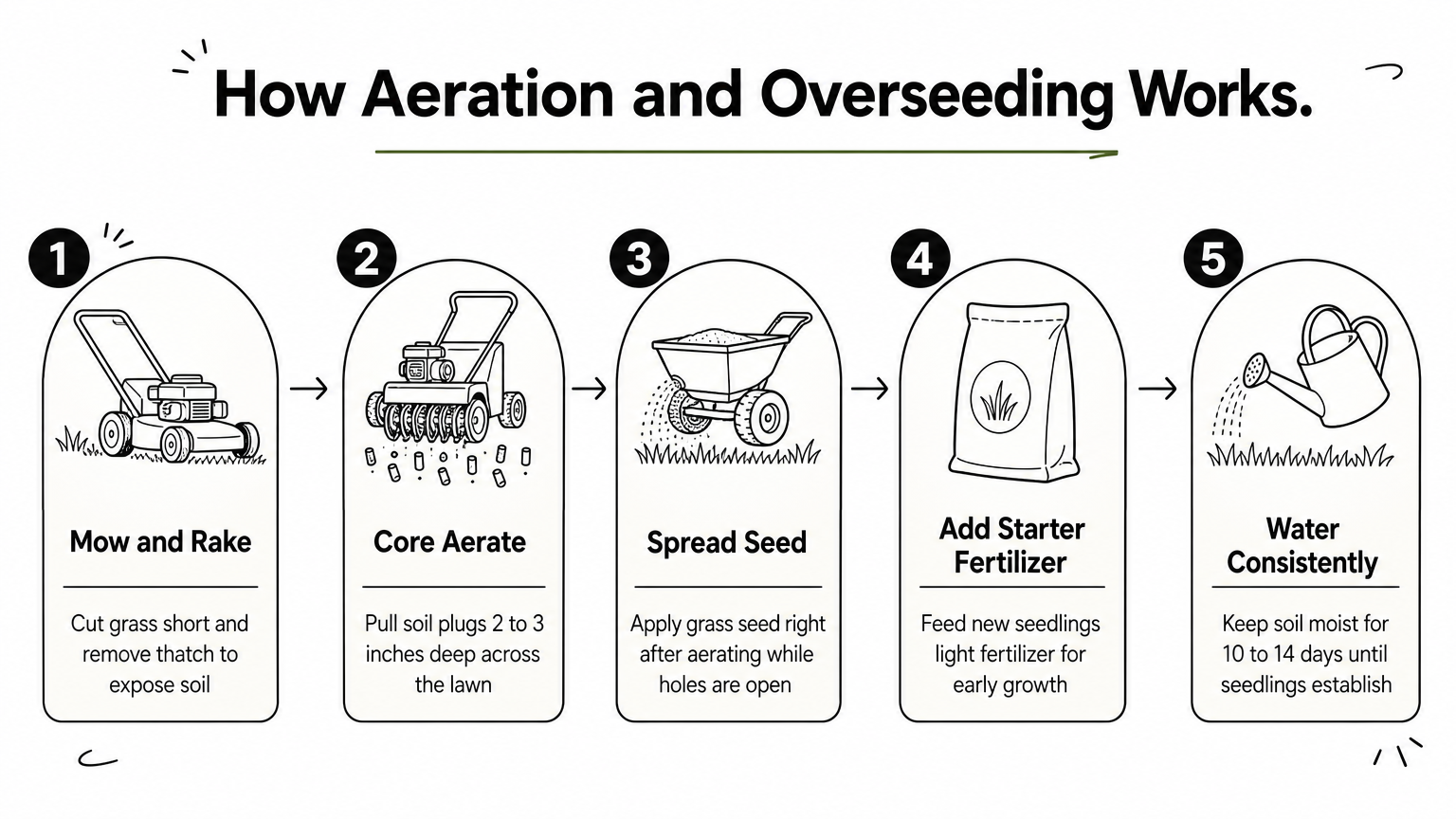
The core process
Most jobs follow the same sequence, whether it's a quarter-acre yard or a commercial property with several acres of turf.
- Mow the lawn shorter than usual and rake up excess thatch so seed can reach bare soil.
- Run a core aerator across the yard, pulling plugs of soil roughly 2 to 3 inches deep and leaving them on the surface to break down naturally.
- Spread grass seed immediately after aerating, while the holes are still open and exposed.
- Apply a light starter fertilizer to give new seedlings the nutrients they need in the first few weeks, following the same seasonal fertilization guidance for Columbia lawns.
- Water consistently , keeping the top inch of soil moist until seedlings establish, usually 10 to 14 days.
Seed that never touches soil never germinates, which is the whole reason aeration comes first.
Why the sequence matters
Overseeding without aerating first means most of your seed lands on compacted soil or thatch and simply washes away or dries out before it sprouts. Plugging holes into the ground gives seed a protected pocket with direct soil contact, moisture retention, and less competition from existing grass. Timing the two together, rather than spacing them weeks apart, is what separates a lawn that fills in evenly from one with patchy, uneven results. That's also why core aeration and overseeding is almost always sold and scheduled as a single visit rather than two separate services, since the equipment and labor overlap and the results depend on doing both back to back.
When is the best time to aerate and overseed
Timing decides whether your seed actually takes root or washes out with the first storm. In the Midlands, that means fall aeration and overseeding for the tall fescue lawns most Columbia homeowners have, since cool nights and warm soil give seedlings the ideal window to establish before summer stress returns. Get the timing wrong and you're fighting weed competition, heat, or dormancy instead of working with the grass's natural growth cycle.
Why fall wins for most Midlands lawns
September through early November is prime for aeration and overseeding in the fall here, because soil temperatures are still warm enough to germinate seed quickly while air temperatures cool off enough to protect young seedlings from heat stress. Crabgrass and other summer weeds are also dying back at this point, so new grass doesn't have to compete for sunlight and nutrients right out of the gate, which is why seeding pairs naturally with getting your yard ready for winter.
Fall gives new grass a full season to root before it has to survive a Carolina summer.
Comparing your seasonal options
| Season | Result for Midlands lawns |
|---|---|
| Early fall (Sept-Nov) | Best window, warm soil plus cool nights, minimal weed competition |
| Spring | Seed germinates but often loses to summer heat and crabgrass before roots mature |
| Summer | Poor timing, heat stress kills young seedlings before establishment |
| Winter | Soil too cold, seed stays dormant or rots |
Spring aeration and overseeding can work in a pinch for warm-season lawns like Bermuda or zoysia, but for the fescue that dominates most Columbia yards, fall is non-negotiable. If you're still deciding when to do aeration and overseeding on your property, book it as soon as daytime highs settle into the 70s and 80s, before the first frost risk shows up on the forecast.
DIY vs. hiring a professional for aeration and overseeding
Renting a core aerator from a hardware store is possible, and plenty of homeowners try it at least once. But the math changes fast once you factor in equipment weight, seed selection, and the actual time it takes to do a half-acre yard correctly. DIY aeration and overseeding can work for a small, flat lawn if you're willing to haul a 200-pound aerator, but most Midlands properties have slopes, irrigation heads, and root systems from mature trees that make a rental machine risky to operate solo.
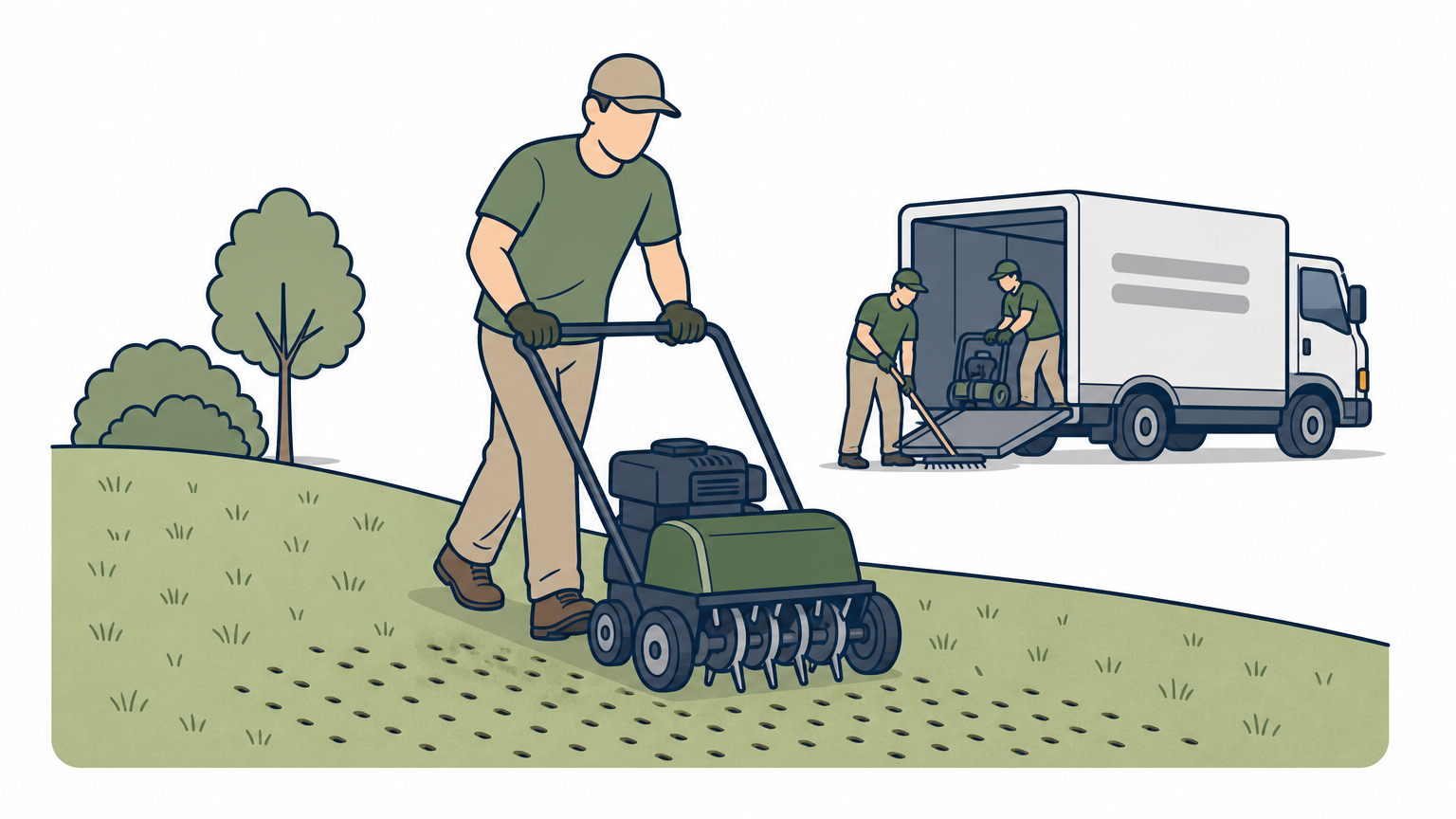
What DIY actually takes
Before you commit to renting equipment, walk through what the job really demands:
- Renting a core aerator ($60-$100 for a half-day) and hauling it in a truck or trailer
- Choosing the right seed blend for sun, shade, and soil type in your specific yard
- Calibrating a spreader so seed goes down evenly, not in clumps or bare strips
- Watering on a strict schedule for two weeks, even on days you'd rather not
- Knowing how to prepare your lawn for aeration and overseeding , including mowing short and clearing debris beforehand
A rented aerator only helps if you know your soil, your seed, and your watering schedule cold.
Why most owners call a crew instead
Hiring a professional removes the guesswork on seed variety, aerator depth, and post-seeding care, and it means the job gets done on the right week instead of whenever a rental is available. A crew that already knows your property, rather than a rotating cast of workers, also spots problem areas like drainage issues or root competition that a first-time DIYer would miss entirely. Sparta Lawn Care's aeration and overseeding service pairs that local soil knowledge with the same familiar crew each visit, backed by the Sparta Family Guarantee if results fall short.
Building a stronger lawn for the long run
A thin, compacted lawn doesn't fix itself with more water or another bag of fertilizer. Aeration and overseeding treats the actual problem, clay soil that's choking your roots, by opening it up and giving fresh seed the contact it needs to take hold. Do it every fall, and you're not chasing a bare lawn each spring, you're building on progress from the year before.
Getting the timing right, prepping properly, and following aeration immediately with seed are what separate a lawn that fills in evenly from one that limps along another season. If you'd rather skip the rental hassle and let a crew that knows your property handle the whole process at the right time, that's exactly what we do for homeowners across Columbia, Blythewood, and Elgin. Schedule core aeration and overseeding services in Columbia, SC with Sparta Lawn Care and give your lawn the reset it needs before next summer hits.