

Winter Lawn Fertilization Tips for a Healthy Yard
When December arrives in the Columbia area, most homeowners shift their focus indoors, assuming their lawn care obligations have ended until spring. But here’s the truth that many property owners discover too late: winter is when your lawn either thrives or struggles. The difference often comes down to one critical decision, taking action on proper winter lawn fertilization tips to give your grass the nutrients it needs to survive the cold months ahead.
If you’ve watched your neighbors’ lawns fade to dull brown or spotted with dead patches while others maintain lush, healthy turf throughout the season, you’ve witnessed the power of strategic winter fertilization. The good news is that this approach isn’t complicated, and you don’t have to figure it out alone.
Understanding Your Lawn’s Winter Struggle
South Carolina’s winters are mild compared to northern states, but that doesn’t mean your lawn has an easy season. Here in Columbia, Blythewood, Elgin, and surrounding communities, the real challenge isn’t sustained freezing temperatures. It’s the unpredictable swings between cold snaps and warmer days that stress grass plants.
Cool-season turfgrasses like fescue enter dormancy during winter, while warm-season varieties like Bermuda grass slow dramatically. Both need sustained nutrition to maintain root strength, resist frost damage, and emerge ready for growth when spring arrives. Without proper nourishment, your lawn becomes vulnerable to winter kill, disease, pest infestation, and the embarrassing brown patches that take months to recover from. Understanding how aeration complements fertilization helps you develop a comprehensive lawn health strategy.
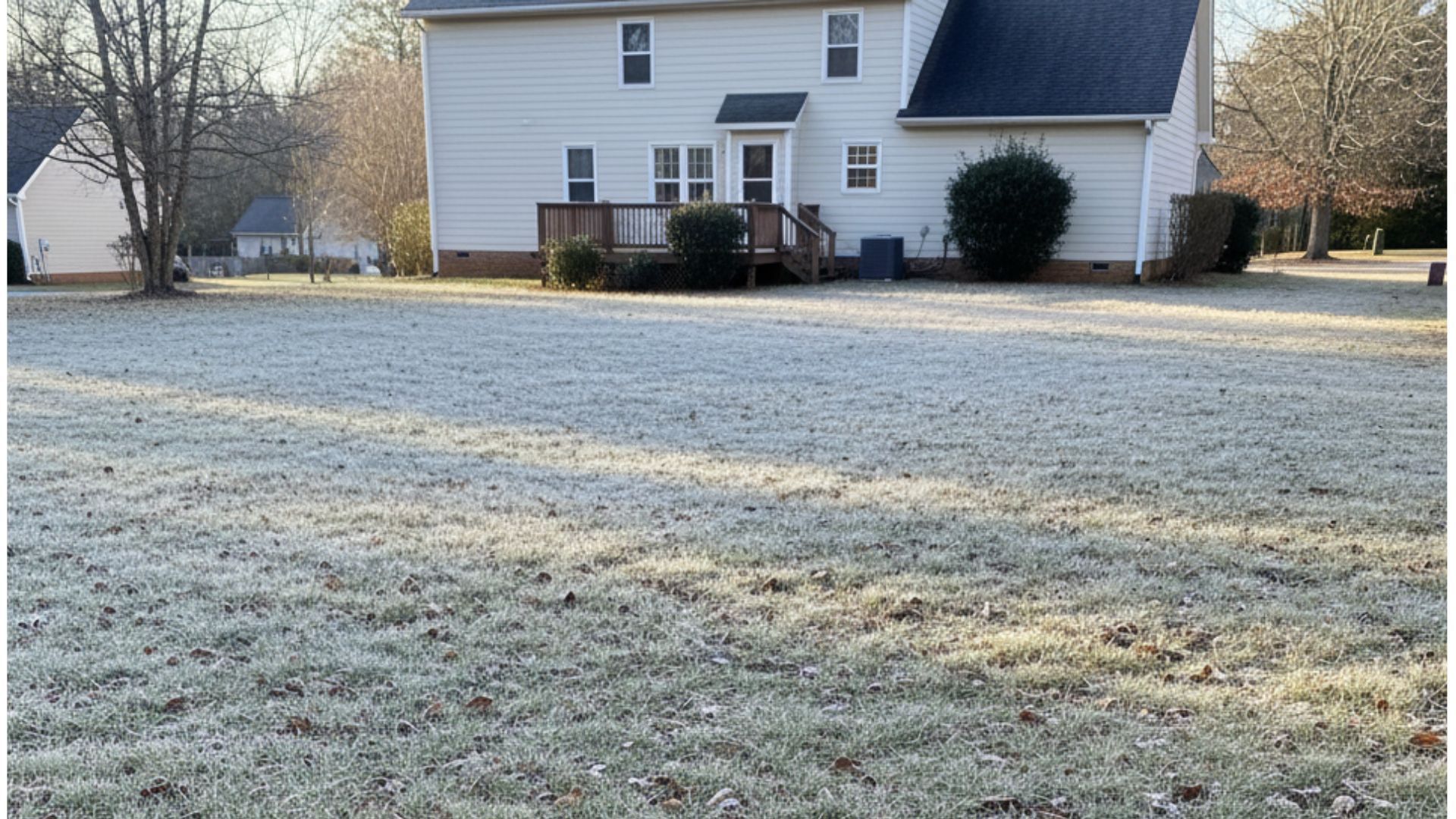
Why Winter Fertilization Matters More Than You Think
Winter fertilization works differently than your summer feeding schedule. The goal isn’t to encourage rapid green growth. It’s to strengthen root systems and build nutrient reserves that help your grass withstand environmental stress.
When you apply winter lawn fertilization tips effectively, you’re essentially giving your lawn insurance against:
- Frost damage that kills leaf tissue and weakens the plant
- Winter pest problems, particularly grubs that become active in cool soil
- Disease development like winter fungal infections that feed on weak plants
- Spring dormancy lag that delays green-up and recovery
- Soil nutrient depletion that accumulates over the dormant season
Think of it this way: a well-nourished lawn in December bounces back in April. A neglected lawn spends May and June struggling to recover.
Timing Your Winter Fertilization Application
The biggest mistake homeowners make is either fertilizing too early or waiting too late. Here’s the right window for the Columbia region:
Apply your first winter fertilization application in late October or early November, before temperatures consistently drop below 50 degrees. This timing allows the fertilizer to work while your lawn still has active growth, strengthening roots before dormancy truly sets in.
For a second application, late November through mid-December works well. By this point, your grass has already begun its winter slowdown, so the nutrients stay in the soil and roots, ready to support the plant through harsh conditions.
Avoid fertilizing after late December. Once your lawn has entered full dormancy, applications won’t be absorbed effectively, and you’re wasting product and money.
Choosing the Right Fertilizer for Winter Conditions
Not all fertilizers are created equal, especially for winter use. The nutrient ratio matters significantly.
Look for fertilizers with higher phosphorus and potassium numbers, the middle and last numbers in the N-P-K ratio on the bag. A ratio like 10-20-20 or 15-30-30 supports root development and cold hardiness. Nitrogen, the first number, should be lower in winter formulations to avoid encouraging tender new growth that frost will damage.
Slow-release or controlled-release fertilizers are ideal for winter applications. They break down gradually, providing steady nutrition over weeks rather than a quick flush that gets washed away by winter rain. This is particularly valuable here in South Carolina, where December and January bring significant rainfall. For more insight on how regular lawn fertilization benefits your yard, explore the science behind consistent nutrient management.
For homeowners concerned about environmental impact, organic or plant-based fertilizers work well. They’re gentler on soil biology and provide gradual nutrient availability. Seaweed-based products and fish emulsion offer added benefits like micronutrients and amino acids that boost stress tolerance.

Preventing Frost Damage While Fertilizing
A common concern: won’t fertilizer cause new growth that frost will kill?
With proper winter fertilizer selection, this isn’t a significant risk. The key is choosing formulations specifically designed for dormant season use, which emphasize root nutrition over shoot growth. Additionally, applying fertilizer when soil temperature is already dropping, late fall rather than early fall, minimizes the chance of stimulating tender green growth.
However, avoid high-nitrogen fertilizers in late fall. These absolutely encourage leafy growth that winter cold will damage.
The Pest Prevention Connection
Here’s something many homeowners don’t realize: winter fertilization indirectly protects your lawn from pest damage.
Healthy, well-nourished grass resists grub damage more effectively because the plant has the energy to compensate for root feeding. Additionally, a strong root system recovers faster from any pest pressure that occurs during winter months. Winter pest control and preventative measures work hand in hand with proper fertilization. While fertilization isn’t a pesticide replacement, it’s an important part of an integrated pest management approach that keeps your lawn naturally more resistant to damage.
Signs Your Lawn Needs Winter Fertilization
Not every lawn needs supplemental fertilization. Some indicators that your lawn would benefit:
- Brown or yellowing appearance in late fall despite recent watering
- Weak, sparse growth that hasn’t filled in from summer
- Thin areas from previous pest damage
- Poor recovery from heat stress the previous summer
- Low organic matter soil that doesn’t retain nutrients well
- More than three years since your last soil test
If you’re uncertain, a soil test provides concrete answers. Contact your local Clemson Extension office for affordable soil testing that identifies exactly what your lawn needs.
Common Winter Fertilization Mistakes to Avoid
Skip these pitfalls for better results:
Applying when soil is frozen or waterlogged – the nutrients won’t absorb properly. Wait for better conditions.
Using cheap, high-nitrogen fertilizers – they encourage growth and waste money with poor results.
Overapplying product – more isn’t better and can burn grass or run off into waterways.
Neglecting rain timing – apply a day or two before rain is forecast so water helps activate the product.
Forgetting that fertilization handles nutrition, not pest control – consider separate products if pest issues exist.
Assuming one application is enough – two applications spaced 4 to 6 weeks apart work better than a single dose.
How Winter Fertilization Affects Spring Lawn Health
The real benefit of winter fertilization tips becomes obvious in spring. Lawns that received proper winter nutrition green up faster, develop fuller growth, and show stronger resistance to spring diseases and stress.
You’ll notice the difference. While neighbors spend May nursing their lawns back to health, yours is already establishing thick, healthy turf ready for summer. That difference came from decisions you made in November and December. Complement your winter fertilization with spring cleanups to set up your lawn for success.
Eco-Friendly Fertilization Options Worth Considering
If environmental stewardship matters to you, several sustainable options work beautifully for winter feeding:
Compost or compost tea feeds soil biology, which slowly releases existing nutrients while building soil structure. This slow-release approach is perfect for winter when grass doesn’t need rapid nutrient uptake.
Kelp or seaweed products provide minerals and natural plant hormones that increase stress tolerance without chemical inputs.
Fish-based fertilizers offer complete nutrition and beneficial microbes that strengthen soil health.
These options typically work more slowly than synthetic fertilizers, so early application in October or November is especially important.
When Professional Guidance Makes Sense
Winter lawn fertilization tips work best when customized to your specific lawn’s needs, your soil conditions, and your local climate patterns. Professional lawn care providers understand the timing and product selection that makes the difference between good results and excellent ones.
If you’d rather focus on enjoying your outdoor space and skip the guesswork, reaching out for professional guidance is a smart move. Sparta Lawn Care has spent years perfecting winter care strategies specifically for Columbia, Blythewood, Irmo, Chapin, and Elgin properties. Learn more about Sparta’s commitment to local lawn care excellence, and discover how their team approaches personalized solutions for your property.
They know how your lawn responds to our particular winter weather patterns, what nutrient deficiencies are common in our soil, and exactly when to apply products for maximum benefit. Professional lawn fertilization services take the complexity out of winter nutrition.
Contact Sparta Lawn Care at (803) 884-9730 or visit lawncarecolumbia.com to discuss a winter fertilization plan tailored to your property. You can also check out what other homeowners in your area have experienced by visiting their profile at https://share.google/gCxQjF4HQC3Z01NRf. With the right plan in place, you can relax knowing that spring green-up is already being set in motion right now.
Your healthier, more resilient lawn starts with winter decisions made today.
Frequently Asked Questions
When should I fertilize my lawn in winter in the Columbia area?
Apply your first winter fertilization in late October or early November, before soil temperatures drop below 50 degrees. Plan a second application from late November through mid December. Avoid fertilizing after late December, since dormant grass cannot absorb nutrients effectively. Proper timing helps strengthen roots and improve frost protection.
What’s the best fertilizer ratio for winter lawn care?
Choose fertilizers with higher phosphorus and potassium, such as 10-20-20 or 15-30-30. Nitrogen should be lower in winter to avoid pushing new growth that frost can damage. Slow release or controlled release fertilizers work best because they provide steady nutrition over time instead of a quick flush that can wash away in winter rain.
How does winter fertilization help prevent pest damage?
Well nourished grass is better able to resist pest and grub damage because it has more energy to support and repair its root system. Strong roots also allow the lawn to recover faster from winter pest pressure. Fertilization does not replace pest control, but it plays an important role in keeping the lawn more resilient.
What are the most common mistakes homeowners make with winter fertilization?
Common mistakes include applying fertilizer to frozen or waterlogged soil, using high nitrogen products meant for active growth, overapplying fertilizer, ignoring rain forecasts, and assuming one application will solve existing lawn issues. Proper product selection, timing, and application rates are key to effective winter fertilization.