

Common Lawn Diseases in South Carolina and Treatment Options
Brown patches appear across your Bermuda grass seemingly overnight. The lawn you’ve been carefully maintaining suddenly looks patchy and unhealthy. This scenario happens constantly throughout the Columbia area, where our warm, humid climate creates ideal conditions for turfgrass diseases that can damage lawns quickly.
For homeowners across Blythewood, Irmo, Rock Hill, and surrounding communities, lawn diseases often feel mysterious. The reality is straightforward. South Carolina’s combination of heat, humidity, and frequent summer storms creates an environment where fungal pathogens thrive. Understanding which diseases commonly affect local lawns helps you identify problems early and take action before minor issues become major renovations.
Recognition of early warning signs and understanding underlying causes can save significant money and frustration while maintaining the curb appeal that matters to property value.
Why South Carolina Creates Perfect Disease Conditions
Our geographic location works against us. Summer temperatures regularly exceed 90°F while humidity stays above 70%, and warm-season grasses spend roughly eight months actively growing. This extended season means extended vulnerability to pathogens that go dormant in cooler climates.
Soil throughout the Columbia region tends toward clay-heavy composition, holding moisture and creating damp conditions many fungal diseases need. Frequent afternoon thunderstorms during summer provide additional moisture, creating an environment where diseases establish and spread rapidly.
Brown Patch Disease
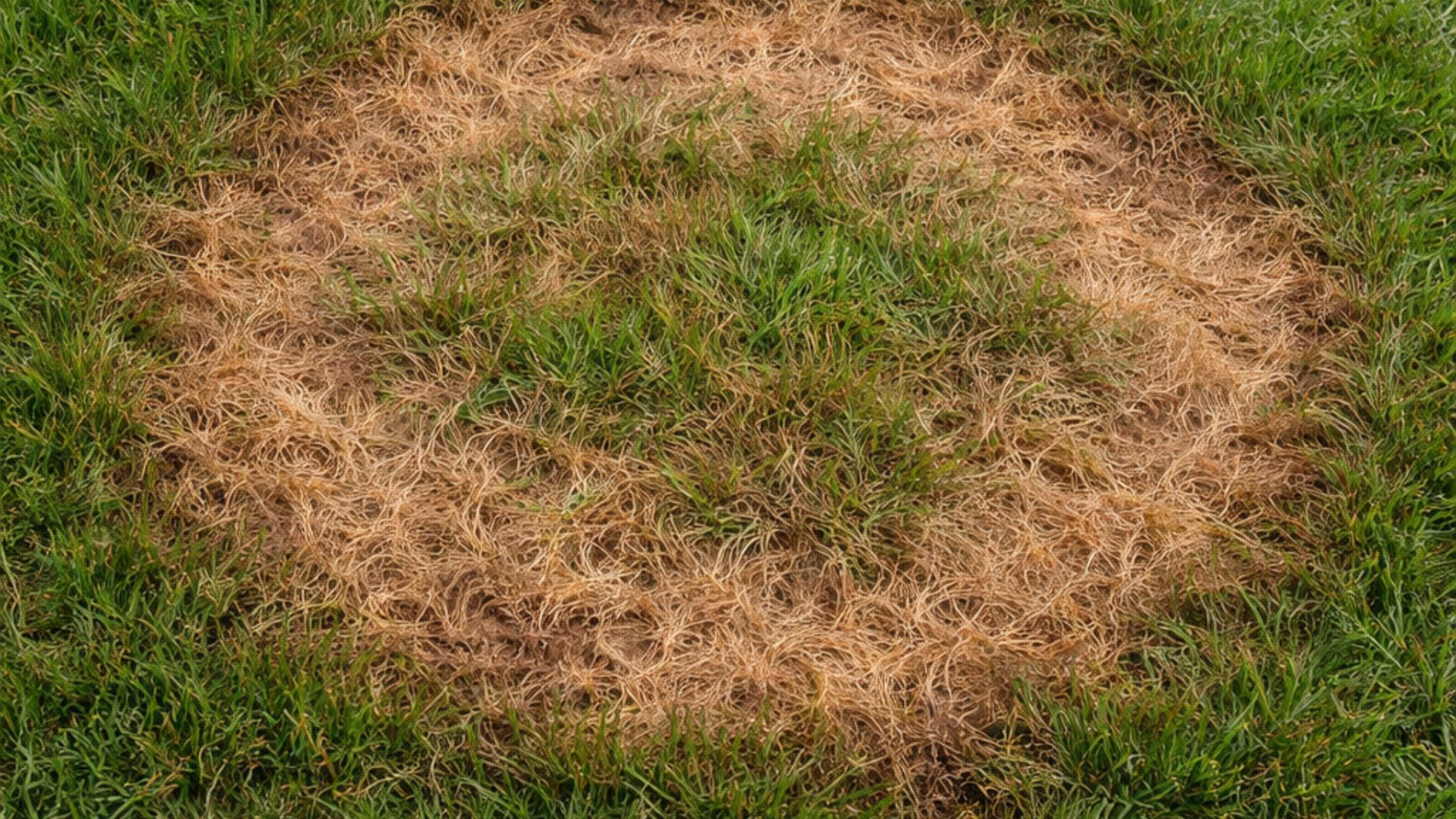
What It Looks Like: Brown patch appears as circular areas of brown, dying grass ranging from a few inches to several feet in diameter. Affected areas often show a distinctive smoke ring appearance at the margins where grayish wilted grass surrounds the brown center. Individual grass blades display tan lesions with darker brown borders.
When It Strikes: Brown patch loves late spring and early fall weather when nighttime temperatures stay above 68°F and humidity remains high. The disease becomes particularly aggressive during extended periods of wet, overcast weather. Peak activity occurs from May through June and again in September through October.
What Causes It: The fungus Rhizoctonia solani thrives in warm, humid conditions with poor air circulation. Over-fertilizing with nitrogen during warm weather, excessive thatch buildup, and evening watering all create ideal conditions. Tall fescue lawns face special susceptibility, though Bermuda and Zoysia can develop brown patch under the right conditions.
Treatment Approaches: Reducing nitrogen fertilization during vulnerable periods helps significantly. Deep but infrequent watering, only in early morning hours, prevents prolonged leaf wetness. Improving air circulation by trimming overhanging branches reduces humidity around grass plants. Professional lawn disease treatment services can apply targeted fungicides at first signs. Increasing mowing height slightly reduces stress on affected grass.
Most brown patch infections resolve once weather conditions change, but treatment prevents spreading and protects healthy grass during active infection periods.
Large Patch Disease
What It Looks Like: Large patch creates irregular, circular patches of thinning or dead grass spanning several feet across. The disease typically affects the entire plant, killing it from roots up. Grass pulls away easily, revealing rotted roots and stolons. Orange or bronze coloring often appears at patch margins during active infection.
When It Strikes: Large patch appears during cool, wet periods in fall, winter, and early spring when temperatures range between 60 and 75°F. This timing surprises homeowners who assume lawn diseases only occur during hot summer months. The disease goes dormant during summer heat and reactivates each fall.
What Causes It: A Rhizoctonia solani strain specifically targets warm-season grasses like Zoysia during slower growth periods. Excessive thatch, compacted soil, poor drainage, and fall over-fertilization increase susceptibility.
Treatment Approaches: Preventative fungicides applied in early fall before symptoms appear can help. Avoiding nitrogen fertilization from September through February reduces disease pressure. Removing excessive thatch through professional aeration services improves conditions. Improving soil drainage in chronically wet areas addresses root causes. Overseeding damaged areas in late spring once temperatures warm consistently helps recovery.
Large patch can persist for years in the same locations if underlying conditions aren’t corrected.
Dollar Spot Disease
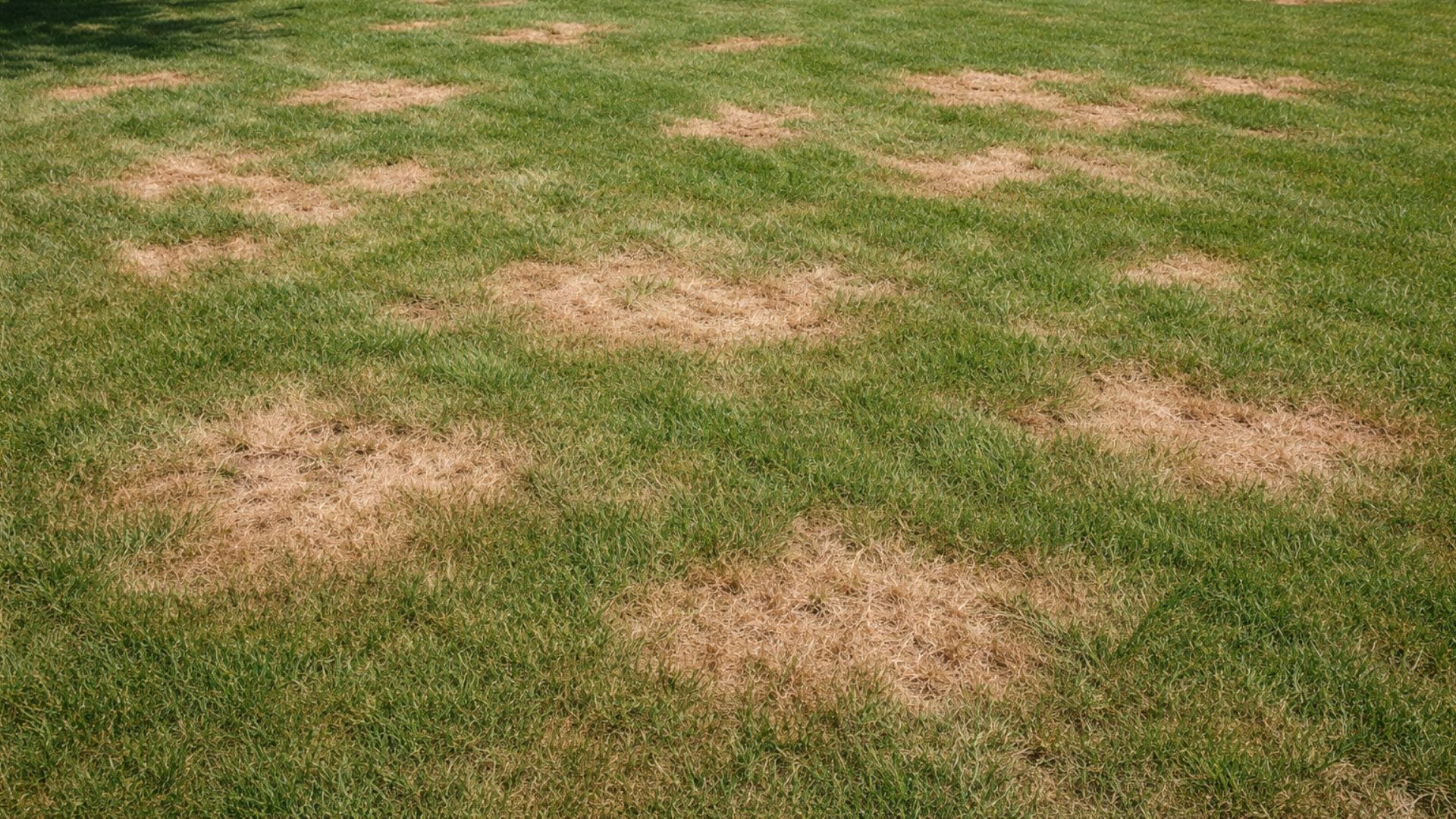
What It Looks Like: Dollar spot creates small, silver dollar-sized tan or straw-colored spots throughout the lawn. Individual spots may merge into larger irregular patches. Grass blades show distinctive hourglass-shaped tan lesions with reddish-brown borders. Early morning dew often reveals white, cobweb-like fungal growth across affected areas.
When It Strikes: Dollar spot becomes active when daytime temperatures reach 60 to 85°F with cool nights and heavy dew. Our area sees two peak periods during late April through June and again in September through October. The disease thrives during moderate temperatures combined with moisture stress.
What Causes It: The fungus Sclerotinia homoeocarpa develops when lawns experience nitrogen deficiency, drought stress, excessive thatch, or poor air circulation. Both under-watering and over-watering can trigger dollar spot, making proper irrigation management critical.
Treatment Approaches: Maintaining adequate nitrogen levels through balanced lawn fertilization programs helps grass resist infection. Deep watering that provides 1 to 1.5 inches per week works better than frequent shallow watering. Removing dew from grass blades by dragging a hose in early morning reduces leaf wetness. Professional disease treatment can apply targeted fungicides while addressing nutritional and moisture issues. Reducing thatch through aeration and increasing mowing height reduces plant stress.
Gray Leaf Spot
What It Looks Like: Gray leaf spot affects primarily St. Augustine and tall fescue grasses, creating small, round to oval spots on grass blades. These spots have tan centers with purple to brown margins. As disease progresses, entire blades turn yellow, then brown, and eventually grass thins significantly. Severe infections make lawns look scorched.
When It Strikes: This disease becomes problematic during hot, humid periods from June through September when temperatures exceed 80°F and humidity stays above 90%. Newly installed sod faces particular vulnerability during establishment.
What Causes It: The fungus Pyricularia grisea spreads rapidly during periods of extended leaf wetness combined with heat stress. Over-fertilization with nitrogen during summer, excessive shade, poor air circulation, and frequent light watering all contribute to development.
Treatment Approaches: Avoiding nitrogen fertilization during peak summer heat reduces susceptibility. Deep watering in early morning only, never in evening, limits leaf wetness periods. Increasing air circulation through selective plant and tree trimming helps. Raising mowing height to recommended levels for your grass type reduces stress. Professional plant and tree disease treatment can apply targeted fungicides and remove grass clippings during active infection to prevent spore spread.
Pythium Blight
What It Looks Like: Pythium blight, also called grease spot, appears as small, circular, water-soaked areas that quickly enlarge and turn brown. In early morning when dew is present, affected areas show cottony white fungal growth. Grass blades feel slimy and mat together. The disease often follows mowing patterns or drainage channels where water accumulates.
When It Strikes: Pythium strikes during the hottest, most humid summer periods when nighttime temperatures stay above 70°F. The disease develops explosively, potentially destroying large lawn areas within 24 to 48 hours once established.
What Causes It: Multiple Pythium species cause this disease, thriving in poorly drained areas with high soil moisture and compaction. Over-watering, excessive nitrogen application, and inadequate air circulation create ideal conditions.
Treatment Approaches: Improving drainage through core aeration or drainage system installation addresses root causes. Drastically reducing irrigation during active disease periods helps. Preventative fungicides can be applied in vulnerable areas. Avoiding nitrogen fertilization during vulnerable summer periods reduces risk. Increasing air movement by opening up dense canopy cover improves conditions.
Pythium requires immediate attention due to its aggressive nature. Misdiagnosis often leads to wrong products that waste time while disease spreads.
Prevention Through Proper Lawn Care Practices
The most effective disease management focuses on prevention rather than treatment. Healthy, vigorously growing lawns resist disease naturally through strong root systems, adequate nutrition, and proper density.
Watering Practices: Deep but infrequent watering, applying 1 to 1.5 inches per week in a single session, works better than daily light watering. Irrigating in early morning hours allows grass blades to dry quickly after sunrise. Prolonged leaf wetness creates moisture conditions most diseases require.
Fertilization Balance: Proper nutrition strengthens grass plants without encouraging excessive soft growth that diseases exploit. Following soil test recommendations rather than guessing about fertilizer needs prevents problems. Understanding the benefits of regular lawn fertilization helps maintain healthy turf. Avoiding heavy nitrogen applications during disease-prone periods in late spring and early fall reduces vulnerability.
Mowing Matters: Sharp mower blades make clean cuts that heal quickly rather than ragged tears that invite infection. Professional lawn mowing services maintain proper mowing height for your grass type. Removing only one-third of blade height per mowing session prevents stress.
Aeration and Thatch Management: Annual core aeration improves drainage, reduces compaction, and controls thatch buildup. These improvements create conditions unfavorable for most lawn diseases while strengthening grass plants. Learn more about why aeration is important for your lawn.
When Professional Treatment Makes Sense
While homeowners can manage minor disease outbreaks, several situations warrant professional help. Rapidly spreading symptoms despite treatment efforts, multiple disease types appearing simultaneously, or uncertainty about proper diagnosis all indicate professional services might prevent costly mistakes.
Sparta Lawn Care in Columbia provides accurate disease identification and targeted treatment protocols. Professional-grade fungicides and application equipment eliminate diseases faster and more completely than consumer products. Our team brings local expertise and understanding of South Carolina’s unique lawn care challenges.
Building Long-Term Lawn Health
Lawn diseases represent symptoms of underlying problems rather than random afflictions. Understanding specific diseases common to our region and the conditions allowing them to develop transforms homeowners from reactive to proactive. The best-looking lawns throughout Rock Hill, Chapin, and Columbia belong to those who recognize that disease prevention requires attention to fundamental practices throughout the year.
Frequently Asked Questions
What are the most common lawn diseases in Columbia, SC?
The most common lawn diseases in the Columbia area include brown patch, large patch, dollar spot, gray leaf spot, and pythium blight. These fungal diseases thrive in South Carolina’s warm, humid climate, especially during spring, summer, and early fall. Symptoms vary but often include circular brown patches, tan spots, or slimy grass blades. Regular lawn disease treatment helps prevent and control these issues.
How can I tell if my lawn has a fungal disease or just drought stress?
Fungal diseases usually appear in defined patterns such as circular patches with darker edges, hourglass shaped lesions on grass blades, or cottony growth visible in morning dew. Drought stress tends to look more even across the lawn, with widespread browning and wilting. Disease issues are more common during humid, rainy periods, while drought stress develops during extended dry weather. Professional diagnosis can confirm the cause if symptoms are unclear.
When should I call a professional for lawn disease treatment?
Contact a professional when symptoms spread quickly despite treatment attempts, when multiple diseases seem present at the same time, or when proper identification is uncertain. Fast moving diseases like pythium blight can destroy large sections of turf within one to two days. Professional services provide accurate diagnosis, commercial grade treatments, and monitoring to reduce repeat outbreaks.
Can lawn diseases be prevented with regular lawn maintenance?
Yes, consistent lawn care greatly reduces the risk of disease. Preventive practices include watering deeply but infrequently in the early morning, using balanced fertilization, aerating regularly to improve drainage and reduce thatch, and maintaining proper mowing height. Healthy lawns with strong root systems are naturally more resistant to disease.
What causes brown patch disease to keep coming back every year?
Brown patch often returns when favorable conditions are not corrected. Common causes include excess nitrogen during warm weather, watering in the evening that leaves grass wet overnight, limited air circulation from dense tree cover, and heavy thatch buildup. The fungus survives in soil and thatch and becomes active again when conditions allow. Adjusting watering habits, fertilization timing, and maintenance practices helps break the cycle.