

Mulch and Rock Installation Chapin SC: What to Expect
Most of the lawn content we publish focuses on turf, timing, and grass selection, like our piece on overseeding in Columbia, SC and why grass type drives every decision. But landscape beds are a separate system entirely, and they have their own set of problems that turf-focused thinking doesn’t address. In Chapin, SC and the broader Columbia, SC area, July is the month when landscape beds tend to show the most stress, and the single biggest factor we see is inadequate or aging mulch. When ground cover breaks down or was never installed correctly, soil temperatures spike, moisture disappears fast, and weed pressure fills the gap almost immediately.
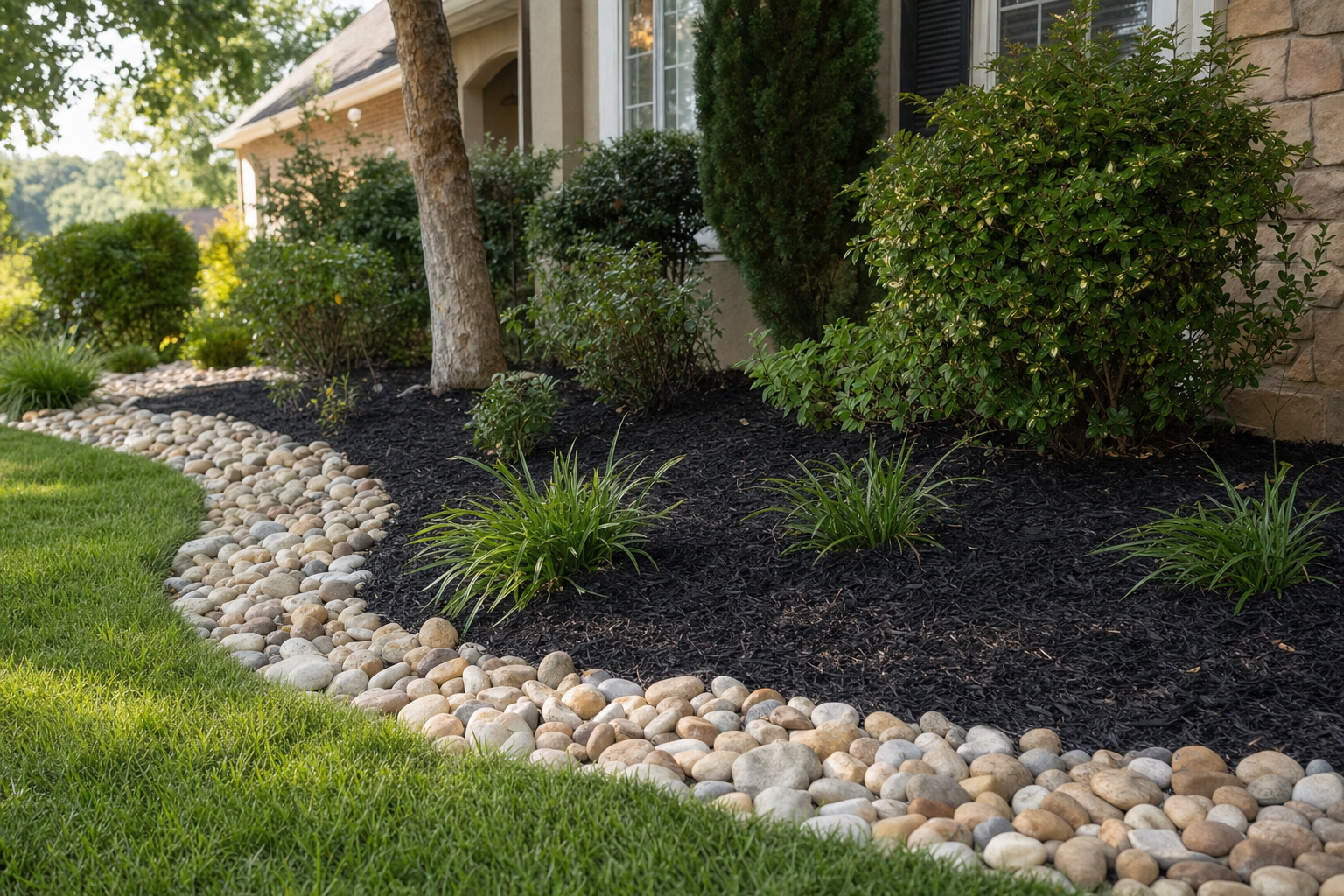
Mulch and rock installation Chapin, SC involves removing old or deteriorated ground cover from landscape beds, edging the bed perimeter, and installing fresh organic mulch or decorative rock at the correct depth to suppress weeds, regulate soil temperature, and retain moisture through the summer. A standard installation takes two to four hours for most residential properties, depending on bed size and material choice.
Key Takeaways
- Organic mulch should be installed at two to three inches deep. Less than that and it won’t suppress weeds or hold moisture through Chapin’s summer heat.
- Rock and gravel installations require a weed barrier beneath them to prevent soil migration and long-term weed intrusion.
- Old mulch that has compacted or turned gray should be removed or broken up before new material goes down, not simply covered over.
- July is one of the most impactful months for mulch installation in the Midlands because soil temperatures are at their peak and moisture loss is fastest.
- Material choice, organic versus inorganic, affects how often you’ll need to refresh and how your beds perform during drought conditions.
What Mulch and Rock Installation in Chapin, SC Actually Involves
There’s a version of mulching that’s purely cosmetic, and then there’s the version that actually functions as a soil management system. We focus on the second one. Before any material goes into a bed, we assess what’s already there. If existing mulch has compacted into a dense mat, it can actually repel water rather than hold it, a condition sometimes called hydrophobic mulch. That material needs to be broken up or removed before fresh mulch is applied. Laying new mulch on top of a compacted layer is one of the most common installation mistakes we see, and it’s why some beds look refreshed for a few weeks and then underperform all summer.
Edging is part of the process too. Clean, defined bed edges keep mulch contained, prevent grass from creeping into the bed, and give the installation a finished look that holds up over time. We cut or re-define edges before material is installed, not after, so the final product sits correctly within the bed boundary.
For organic mulch, we typically work with hardwood, pine bark, or dyed varieties depending on what the homeowner wants and what complements the existing landscape. Depth matters more than most people realize. Two to three inches is the functional range. Below two inches, weed suppression drops off significantly and moisture retention is minimal. Above three inches, you risk smothering plant roots and creating conditions that hold too much moisture against tree bases and shrub stems.
Rock and gravel installations follow a different sequence. Because inorganic materials don’t break down, they need a properly installed weed barrier beneath them to prevent soil from migrating up through the rock over time. We use commercial-grade landscape fabric, not the thin residential rolls that degrade in a season or two. The fabric is secured, then rock is spread and leveled. Decorative options like river rock, pea gravel, and crushed granite are all available, and each has different drainage characteristics worth considering given how much rain Chapin and the surrounding Lake Murray area can receive in a single summer storm.
Why Does the Chapin Climate Make Material Choice More Important?
Chapin sits in the South Carolina Midlands, where summer conditions are genuinely demanding. July soil temperatures in this region regularly exceed 90 degrees Fahrenheit at the surface, and without adequate ground cover, plant roots in landscape beds are working against significant heat stress. The Lake Murray area also experiences concentrated afternoon thunderstorms that can wash thin or poorly installed mulch out of beds entirely, especially on any slope or grade.
Organic mulch has a clear advantage in these conditions because it moderates soil temperature more effectively than bare soil and adds organic matter as it breaks down. The tradeoff is that it does break down, typically requiring a refresh every one to two years in our climate. Rock and gravel don’t break down, which makes them lower maintenance over time, but they also absorb and radiate heat rather than insulating against it. That makes rock a better fit for beds that aren’t planted densely with heat-sensitive plants.
Weed pressure is another local factor. Our landscape bed weed control work in Blythewood, SC shows how quickly summer weeds establish in the Midlands once ground cover thins out. Mulch and rock installation is the mechanical side of weed management, while chemical treatment handles what gets through. The two work together, and skipping either one tends to produce worse results than doing both.
What to Expect During a Professional Installation
For most residential properties in Chapin, the process runs two to four hours from start to finish. We begin with a walkthrough of the beds to identify any plants, irrigation heads, or features that need to be worked around carefully. Then we handle edging, old material removal or conditioning, weed barrier installation if rock is being used, and finally the spread and leveling of the new material.
We keep mulch pulled back from the base of trees and shrubs, a detail that matters more than it might seem. Mulch piled against bark traps moisture and creates conditions for fungal disease and pest activity. A two to three inch gap around stems and trunks is standard practice on every installation we do.
After installation, we do a final cleanup of any material that landed on hardscape, sidewalks, or turf. The beds should look clean and defined when we leave, not like a job that just happened to end there.
How Do You Know When Your Beds Need Fresh Mulch or a Rock Conversion?
The clearest sign that organic mulch needs attention is color. Fresh hardwood mulch is dark brown. When it fades to gray and starts to look dusty or thin, it’s lost most of its functional value. You might also notice more weed activity than usual, or that your beds are drying out faster between rain events. These are all indicators that the ground cover layer has broken down past the point where it’s doing much work.
For beds that have had rock for several years, the common issue is soil migration. If you can see the fabric beneath starting to surface, or if weeds are establishing directly in the rock, the barrier has likely failed and the bed needs to be reset. Some homeowners also switch from organic to rock after a few cycles of mulching, simply because the maintenance interval fits their schedule better.
If you’re also dealing with fire ants or other pest activity in or around your landscape beds, those issues are worth addressing before or alongside a mulch installation. Our fire ant control guide for Columbia, SC covers how that process works and why timing matters in the summer months.
Frequently Asked Questions
How much mulch do landscape beds in Chapin typically need?
Most residential landscape beds need two to three inches of mulch for effective weed suppression and moisture retention. Beds that have been refreshed recently may only need one to one and a half inches added to bring them back to the functional range. We measure existing depth before recommending how much material to bring in so you’re not paying for product you don’t need.
Is rock or mulch better for landscape beds in the Chapin area?
It depends on what’s planted in the bed and how much maintenance you want to do. Organic mulch insulates soil better and supports plant health more directly, which makes it the better choice for densely planted beds. Rock works well in beds with drought-tolerant plants, around hardscape features, or in areas where you want a permanent solution that doesn’t require seasonal refreshing. In Chapin’s summer heat, we generally steer clients away from dark rock in beds with heat-sensitive plants because rock absorbs and radiates heat rather than moderating it.
Do I need to remove old mulch before new mulch is installed?
Not always, but it depends on the condition of what’s there. If existing mulch has compacted into a dense, mat-like layer, it should be broken up or removed before new material goes down. Covering compacted mulch with fresh material doesn’t fix the drainage and moisture problems underneath. If the existing layer is thin and still loose, we can often work the new material in without full removal.
How long does mulch and rock installation in Chapin, SC take?
Most residential installations take two to four hours, depending on the number and size of beds, whether old material needs to be removed, and whether we’re installing a weed barrier for rock. Larger properties or projects that include re-edging overgrown bed lines may run longer. We can give a more specific estimate after a site assessment.
July is genuinely the month when the value of a proper mulch and rock installation Chapin, SC homeowners invest in becomes visible. Beds that went into summer with a solid two to three inch layer of fresh material are holding moisture and staying cooler than bare or thinly covered soil, and that difference shows up in how plants look by August. If your beds are fading, drying out fast, or showing more weeds than usual, the ground cover layer is likely the first thing worth addressing. Reach out to our team through our contact page and we can assess what your beds actually need before the heat of summer does more damage.