

Fire Ant Control in Columbia, SC: How the Process Works and Why June Is the Most Critical Month
If you own a home in Columbia, SC, fire ants have almost certainly already found your yard. Our crews see it constantly: a homeowner calls about a fresh layer of mulch or a new landscape installation they have been putting off since spring, and before the conversation gets far, we are already spotting the signs. Raised mounds scattered through the turf, clustered near the edges of beds and walkways, sometimes pressed up against the base of a tree. The clay-heavy soils throughout the Midlands hold moisture even during dry stretches, and that combination of warmth and retained soil moisture is exactly what fire ant colonies need to establish fast and grow hard. Fire ants do not announce themselves politely. They show up in the middle of other work and have a way of making themselves the priority fast. That is why fire ant control Columbia SC comes up in so many of our conversations this time of year, and why June is genuinely the most important month to address it.
Why Fire Ants Are Such a Persistent Problem in the Columbia Area
The Midlands of South Carolina offer fire ants almost everything they need to thrive. The red imported fire ant, Solenopsis invicta , loves warm, moist soil and open sunny areas, which describes most residential lawns in Columbia from April through October. The clay-heavy soils common throughout neighborhoods like Forest Acres and the areas surrounding Lake Murray create just enough moisture retention to keep colonies active through extended dry stretches. Fire ants are not a seasonal nuisance here the way they might be in cooler climates. In Columbia, they are a year-round resident that simply becomes more dangerous and more visible as temperatures climb.
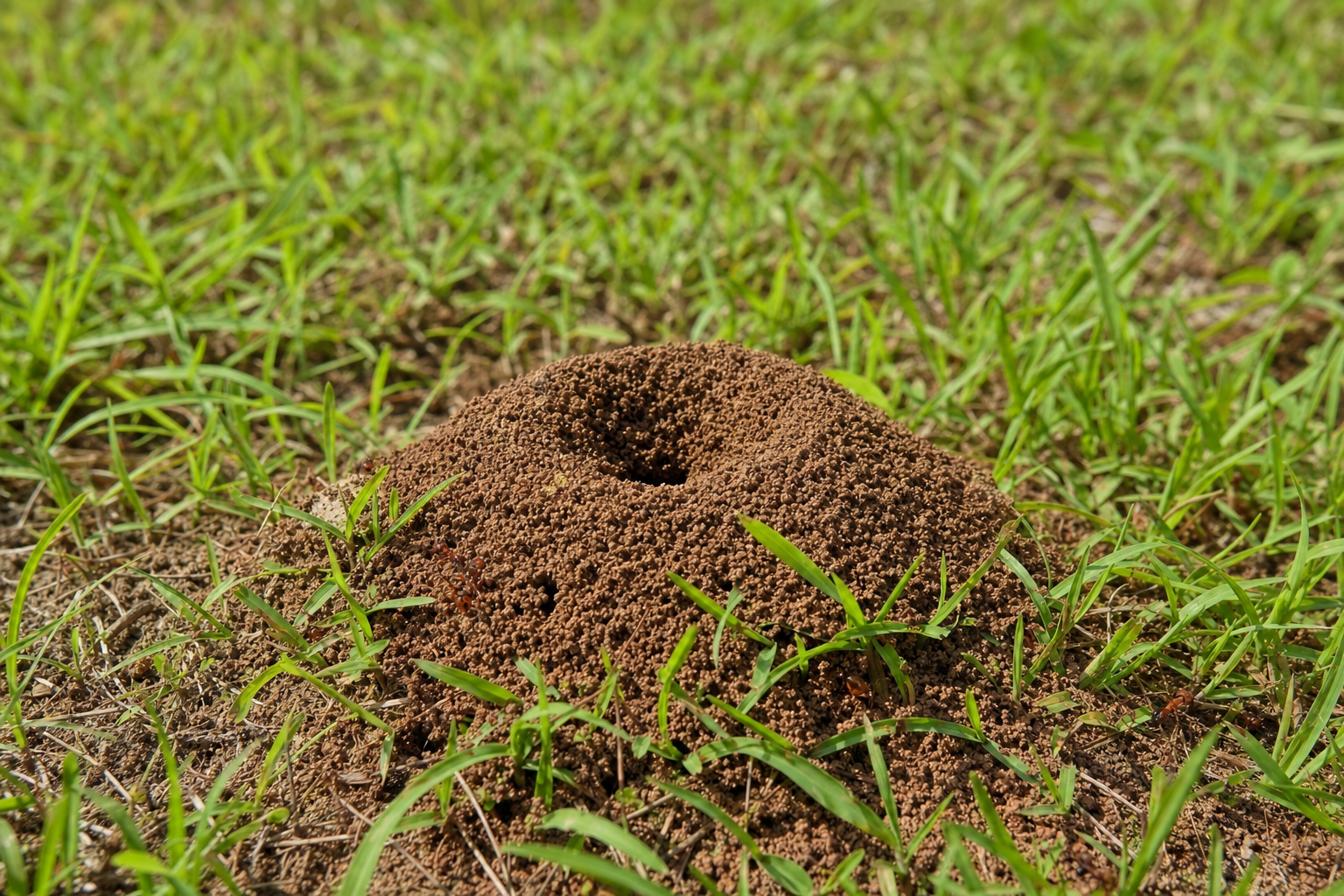
By June, colonies that established themselves in late winter have had months to grow. A mature fire ant colony can contain anywhere from 100,000 to 500,000 workers, and a single queen can produce up to 1,500 eggs per day. What looked like a small mound in April can be a fully active, densely populated colony by the time summer heat sets in. This is also the period when foraging activity peaks, meaning ants travel further from the mound in search of food, which increases the likelihood of contact with people, pets, and children playing in the yard.
For homeowners managing other pest pressures at the same time, it helps to understand how fire ants fit into the broader picture. We have written about mosquito control timing in Columbia and how early summer is critical for multiple pest categories simultaneously. Fire ants fall into that same window, and addressing them alongside mosquito control or flea and tick control is often the most efficient approach for homeowners dealing with multiple issues at once.
What Professional Fire Ant Control Columbia SC Actually Involves
There is a meaningful difference between treating fire ants and controlling them. Homeowners who pour boiling water on mounds or apply over-the-counter granules to visible mounds are treating the symptom. Professional fire ant control Columbia SC targets the colony structure itself, specifically the queen, because a colony that loses its queen cannot sustain itself.
Our approach uses a two-step method that combines broadcast bait application with individual mound treatment. The broadcast bait is applied across the entire lawn using a spreader, not just to visible mounds. Fire ant workers pick up the bait and carry it back to the colony as food, where it is eventually fed to the queen. The active ingredient in the bait disrupts reproduction or acts as a slow-acting insecticide, depending on the product used. Because the bait has to be carried back to the colony, it works more slowly than direct contact products, typically over two to four weeks. That timeline matters, and homeowners should not expect overnight results from this step.
The individual mound treatments we apply alongside the broadcast bait work faster and target large, established mounds directly. We use contact insecticides applied around and into the mound to eliminate the worker population and prevent the colony from relocating before the bait has time to work. The combination of both methods is significantly more effective than either one alone.
Timing around weather is also part of the process. Bait applications are most effective when fire ants are actively foraging, which happens when soil temperatures are between 70 and 95 degrees Fahrenheit and conditions are dry. We do not apply bait immediately after rain or when rain is expected within a few hours, because moisture degrades the bait before workers can collect it. In Columbia’s summer climate, this means we pay close attention to the forecast and schedule treatments accordingly.
How to Recognize When You Actually Need Treatment
The most obvious sign is visible mounds, but fire ant activity is not always that straightforward. Mounds are not always large or dome-shaped, particularly in turf that is mowed regularly. Sometimes the first real indication is a sting, which produces a sharp burning sensation followed by a raised white pustule within 24 hours. Multiple stings can cause a serious reaction in sensitive individuals, and pets are particularly vulnerable because they cannot communicate what happened.
Beyond physical contact, signs worth watching for include disturbed soil at the base of landscape beds, activity near irrigation heads or electrical boxes (fire ants are drawn to electrical equipment), and small clusters of ants moving in lines across hardscaped areas. If you are seeing any of these in your yard, scheduling fire ant control Columbia SC before the colony grows further into the summer is the right move.
We also see fire ant pressure increase in yards that have recently had new sod or pine straw installed, since both create warm, sheltered environments that colonies find attractive. Similarly, areas with fresh landscape bed maintenance can disturb existing colonies and cause them to relocate deeper into the turf.
Scheduling Treatment and What to Expect
Our fire ant control service is available as a standalone treatment or as part of a broader lawn insect control program. For properties dealing with multiple pest pressures, the combined approach tends to produce better long-term results. You can reach our team through our contact page to schedule an assessment. June is peak season, and treatment slots fill up faster than most homeowners expect once the heat settles in and the mounds become impossible to ignore.
The two-step bait-and-mound method remains the most reliable protocol for eliminating fire ant colonies in South Carolina’s climate, and applying it before mid-July gives the bait the best possible window to work while foraging activity is still at its highest point of the season. Reaching out early gives your lawn the full benefit of that window rather than playing catch-up once colonies have had another month to expand.