

How to Water After Aeration and Overseeding in Columbia, SC
The short answer to watering after aeration and overseeding is this: water the same day you seed, then keep the top inch of soil damp with two to three short sessions a day until the seedlings come up. That usually takes 7 to 21 days. After that, switch to one longer session a day, then to deeper watering a few times a week, until the lawn gets about 1 inch of water per week.
Most failed overseeding jobs trace back to water, not seed. Too little and the seed dries out before it roots. Too much and it washes into low spots or rots in soggy soil. The advice online also seems to contradict itself, with some guides saying once a day, others twice, others three times a week. They are all right, but for different weeks of the process.
At Sparta Lawn Care, we offer aeration and overseeding to homeowners around Columbia, SC, and we recommend fall for it. This guide gives you four steps, a full schedule table, a simple way to measure your sprinkler, and fixes for the problems that show up in the first six weeks.
Why watering decides whether overseeding works
Yes, you should water after aeration and overseeding, and you should start right away. Seed cannot germinate without steady moisture. The loosened soil and open aeration holes dry out faster than an untouched lawn, so rain alone rarely covers the job.
The schedule at a glance
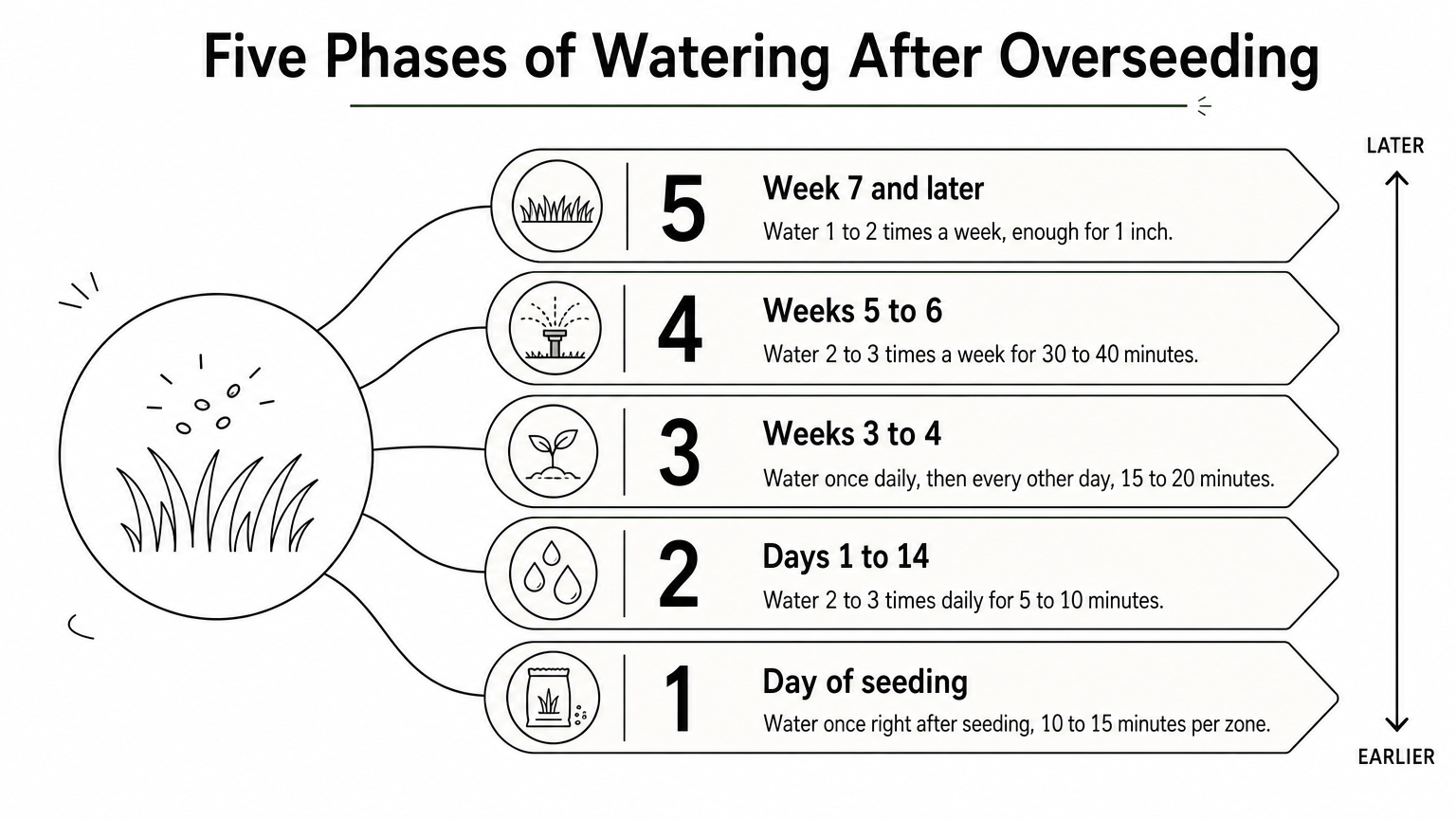
Use this table as your plan for how often to water your lawn after aeration and overseeding. The dates are guides. Germination speed , not the calendar, tells you when to move to the next phase.
| Phase | How often | Run time per zone | Goal |
|---|---|---|---|
| Day of seeding | Once, right after | 10 to 15 minutes | Settle seed into holes, wet the top inch |
| Days 1 to 14 (until sprouts) | 2 to 3 times daily | 5 to 10 minutes | Top inch never dries out |
| Weeks 3 to 4 | Once daily, then every other day | 15 to 20 minutes | Push roots downward |
| Weeks 5 to 6 | 2 to 3 times a week | 30 to 40 minutes | Soak 2 to 3 inches deep |
| Week 7 and later | 1 to 2 times a week | Enough for 1 inch total | Normal lawn routine |
Many short sessions at first, then fewer and longer ones: that single shift is the whole schedule.
Check your seed type and sprinkler first
Seed type sets your timeline. Perennial ryegrass sprouts in about 5 to 10 days, tall fescue in about 7 to 14 days (longer in cool soil), and Kentucky bluegrass in about 14 to 30 days. Read the bag, and expect the slower end if you seeded late in fall.
Next, measure your sprinkler output . Set three to five empty tuna cans across the zone, run the sprinkler for one hour, and measure the water depth in each can. If the average is half an inch, your sprinkler delivers 0.5 inch per hour. You will use that number in Step 3.
Step 1. Water the same day you seed
Water immediately after aeration and overseeding, on the same day. A gentle 10 to 15 minute run per zone settles the seed into the aeration holes and wets the top inch of soil, which is where germination happens.
Water right away, but gently
Keep the first watering light. A heavy blast moves seed around, so use your sprinklers rather than a hose nozzle, and use this checklist:
- Run each zone for 10 to 15 minutes.
- Stop the moment you see puddles or runoff.
- Check that the soil is dark and damp, not muddy.
- Keep kids, pets and mowers off the lawn.
Can rain do the job?
Only a steady, light rain can replace a watering, and it has to keep the top inch damp for hours. A short shower or a downpour does not count. A downpour can wash seed into low spots, so check afterward. If the soil surface looks pale or feels dry to your finger, run the sprinklers.
Seed that lands on dry soil and stays dry gets no second chance, so water the day you seed.
Step 2. Water 2 to 3 times a day until sprouts
From day 1 until the seedlings are up, water two to three times a day for 5 to 10 minutes per zone. The goal is damp soil, never soaked soil . The top inch should not dry out between sessions.
Time your sessions across the day
Spread the sessions so the surface stays moist through the warmest hours:
- Early morning, ideally before 10 a.m.
- Midday or early afternoon, around 12 to 2 p.m.
- Mid-afternoon, around 3 to 4 p.m., only on hot, windy or sandy-soil days.
Avoid late evening watering. Wet grass overnight invites disease, and warm, humid Midlands weather makes that worse. On cool, cloudy days, two sessions are usually enough. Skip watering when temperatures sit near freezing, because ice does the seed no good.
Use the finger test every day
Push a finger or screwdriver into the soil an inch deep. It should feel cool and damp, not muddy . If the top half inch is dry, add a session or lengthen the next one by a few minutes. Keep this routine going for about a week after the first green shows. Young seedlings have tiny roots and cannot survive a dry spell .
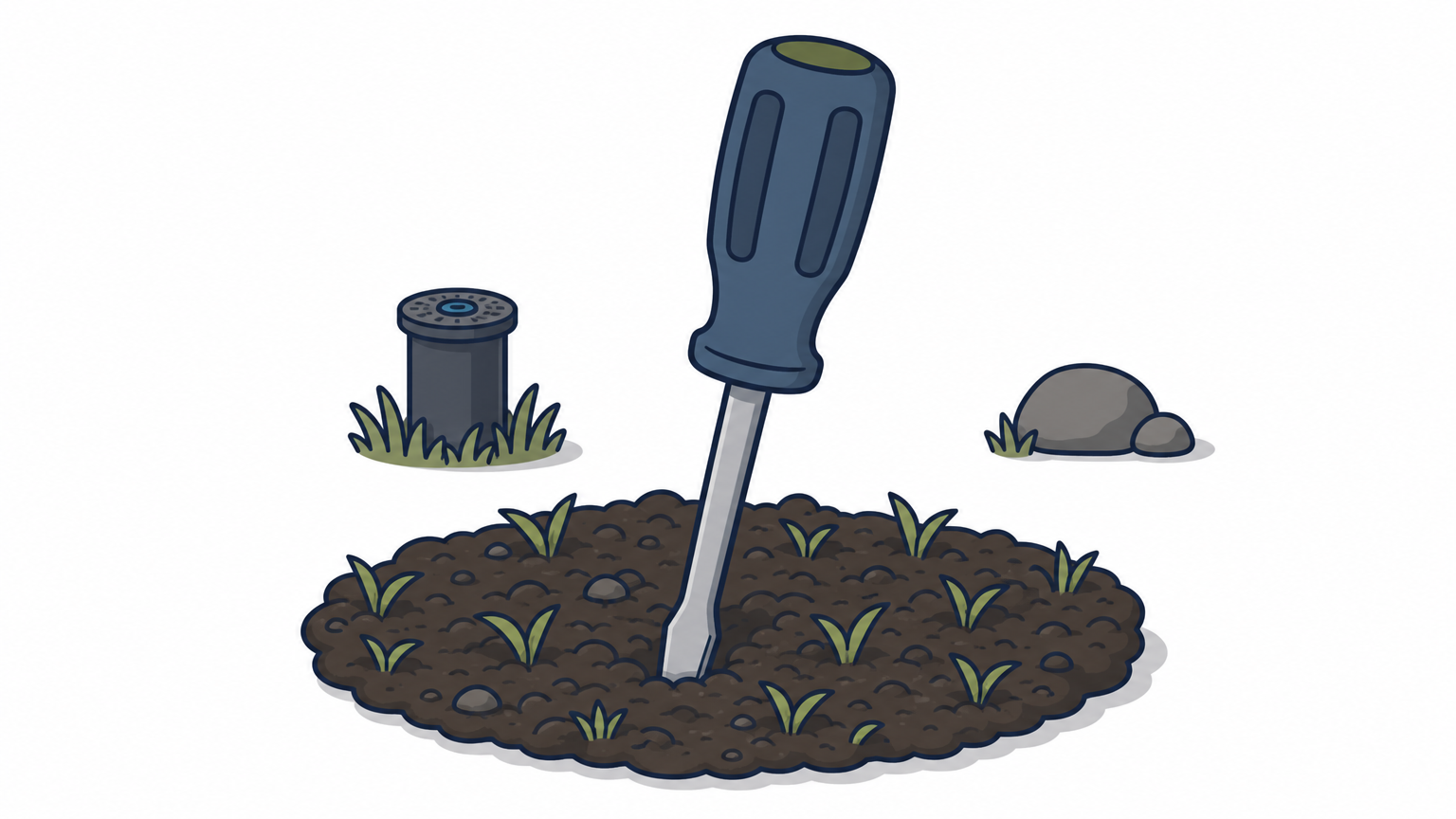
Check the soil every day, because the weather changes faster than any schedule.
Step 3. Cut back as seedlings fill in
Once most of the seed has sprouted, keep watering, but change the pattern. Move from many short sessions to fewer, longer ones so the roots follow the water down. You never stop watering. You taper into a normal lawn routine.
Weeks 3 to 6: fewer, longer sessions
When seedlings stand about an inch tall, water once a day for 15 to 20 minutes. After about a week, go to every other day. By weeks 5 and 6, water two to three times a week for 30 to 40 minutes, enough to soak the soil 2 to 3 inches deep . Drop a step only when the whole lawn looks evenly green. Any patchy zone should stay on the earlier routine a little longer.
Week 7 and later: about 1 inch per week
A mature lawn needs roughly 1 inch of water a week, rain included. Here is a worked example using the tuna can test from earlier. Your sprinkler delivers 0.5 inch per hour, so you need 2 hours per week per zone. That works out to two 60-minute sessions, or three 40-minute sessions. Subtract any rain you received that week, and water deeply and less often rather than lightly every day.
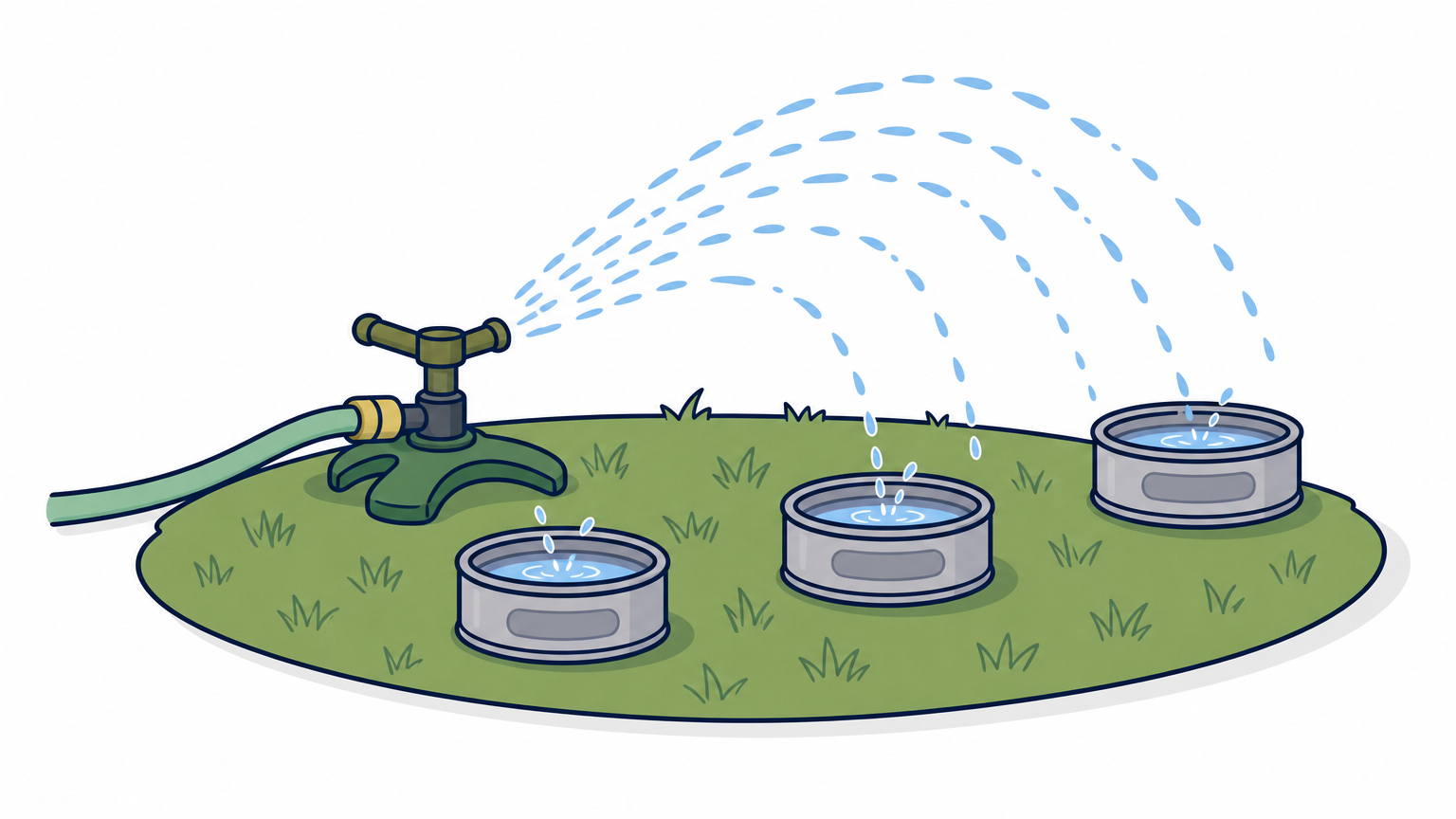
Taper by lengthening the gaps between sessions, never by stopping all at once.
Step 4. Fix problems and know when to mow
Most trouble comes from too much or too little water, and you fix it by changing run times, not by guessing. Once the new grass is established, you can also make your first cut , which marks the end of the seedling phase.
Too much water or too little
Match what you see to the fix below.
| What you see | Likely cause | Fix |
|---|---|---|
| Puddles, runoff, seed bunched in low spots | Sessions too long | Split into shorter cycles, reseed bare low spots lightly |
| Soggy soil, mold, yellowing seedlings | Overwatering | Skip a session, water earlier in the day |
| Crispy, brown seedlings or bare patches | Soil drying between sessions | Add a session, reseed the bare spots |
| Thin, patchy germination | Uneven sprinkler coverage | Check for dry zones with the tuna can test |
Mowing, rain and cool weather
Mow for the first time when the new grass reaches about 3 to 4 inches, usually three to four weeks after seeding, depending on seed type. Use a sharp blade, set the mower high, and never remove more than one third of the height. Skip the watering session just before so the soil is firm underfoot . Until then, stay off the lawn as much as you can.
Count rain toward your totals, and skip sessions when the top inch is already damp. Cooler fall weather slows evaporation, but it also slows germination, so late-seeded lawns can take well beyond two weeks to sprout. Warm spells in the Columbia area can dry the soil quickly. Whatever the weather, keep the schedule until you see green , then follow the taper.
When something looks wrong, adjust the run time first, because the seed is rarely the problem.
Stay consistent and adjust to the weather
Watering after aeration and overseeding comes down to one pattern: water the same day, keep the top inch damp with two to three short sessions daily until sprouts appear, then taper to longer, less frequent sessions until you reach 1 inch per week. Check the soil every day and let your seed type and the weather guide each move.
If you would rather have experienced hands handle the aerating and seeding, talk to Sparta Lawn Care about aeration and overseeding.